Why Swimming Pool Paint Peels or Blisters
Peeling pool paint is a symptom, not a complete diagnosis. The existing coating, substrate, moisture, contamination, preparation and cure conditions all need to be considered before another system is applied.
Common causes of coating failure
Several failures can look similar from a distance. Identifying the pattern and what sits beneath it is more useful than simply covering the visible damage.
- Loose, contaminated or poorly prepared surfaces
- A new product that is incompatible with the existing coating
- Moisture pressure or a damp substrate
- Application outside the product’s temperature or weather limits
- Insufficient drying or cure time before refilling
- Movement, cracks or defects in the underlying shell
Why painting over the problem rarely lasts
A new coat relies on the adhesion of everything beneath it. If the existing paint is loose, contaminated or incompatible, the new finish may detach with it.
Preparation may include removing failed material, cleaning, abrading and repairing defects. The exact route depends on the existing coating and substrate rather than a universal checklist.
What a useful assessment looks for
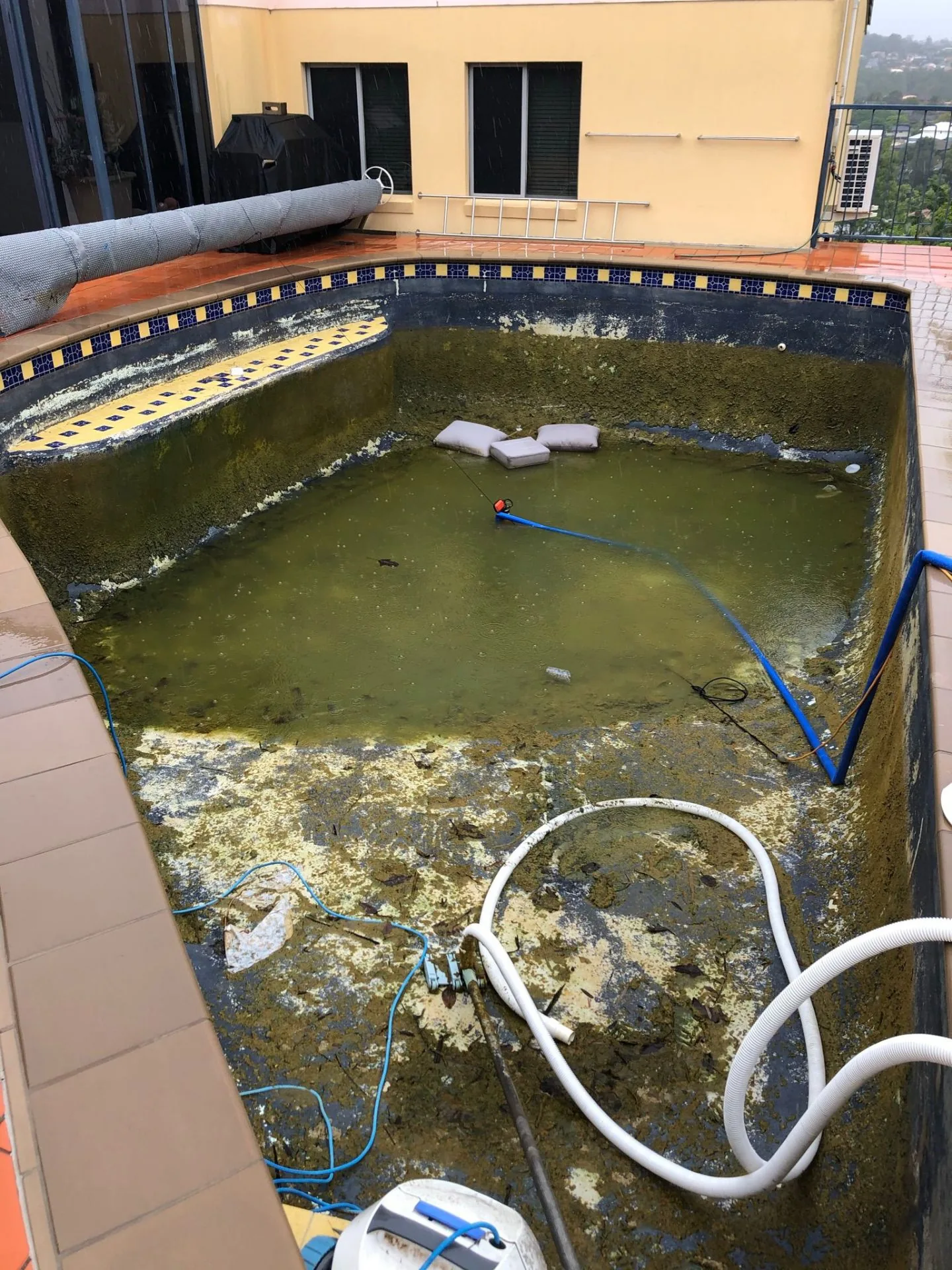
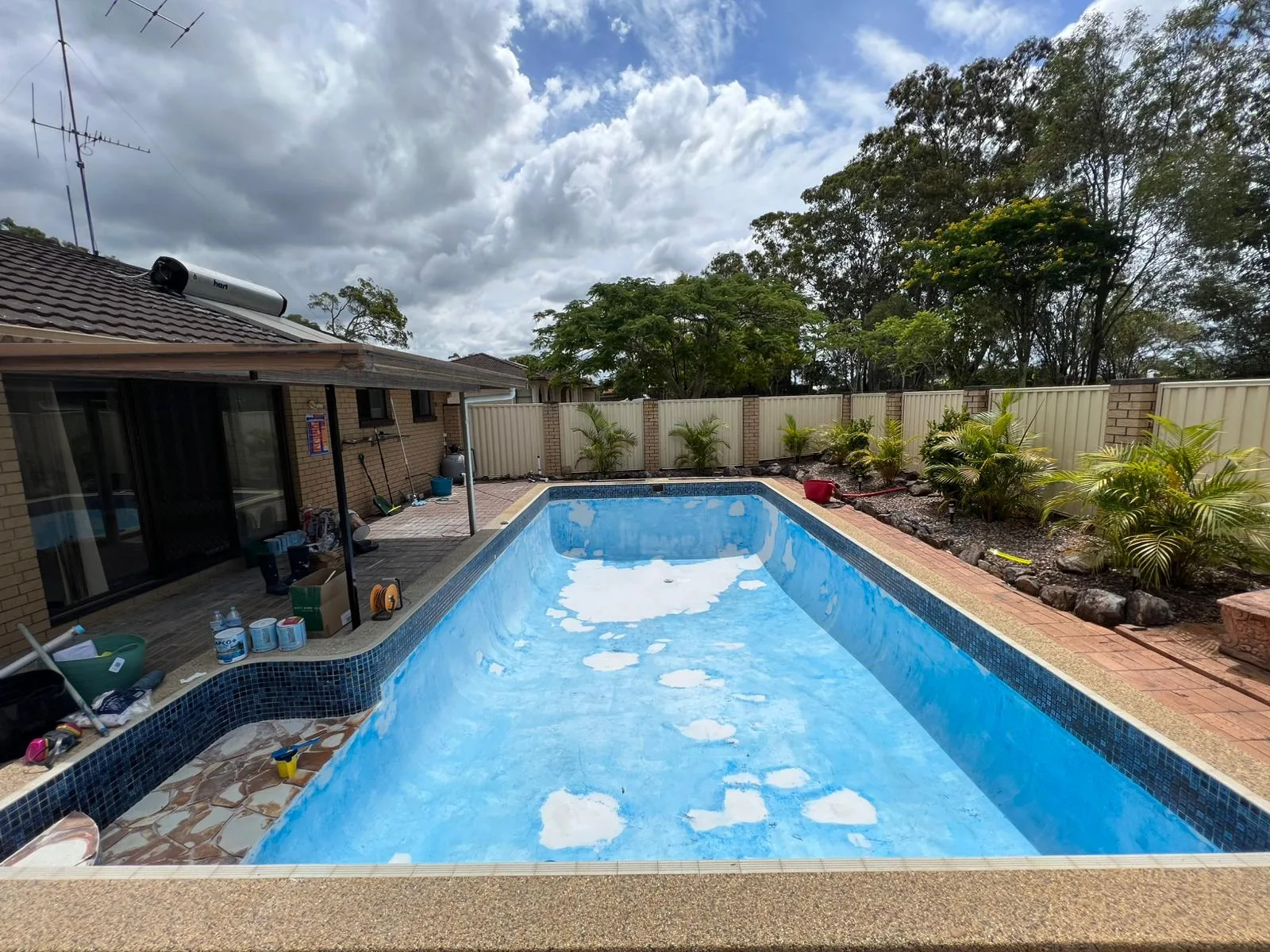
Photographs should show both the overall failure and close detail. The history of the pool can be equally important: previous products, refill timing, water loss and when the problem first appeared all help narrow the cause.
- Where failure starts and how far it extends
- Whether the coating is soft, chalky, blistered or flaking
- Cracks, hollow areas or exposed substrate
- The likely type and age of existing coating
- Recent repairs, water loss or changes in use
Choosing the next coating system
No single pool paint is correct for every shell or every previous finish. Compatibility, preparation requirements, site conditions and the intended use all influence the specification.
Commercial pools also need the closure and cure sequence coordinated with the reopening date. Rushing that stage can undermine otherwise sound preparation.
Information to send Oasis
Include wide and close photos, the pool construction if known, previous coating details, postcode and preferred working window. Oasis can then advise whether the next step is further diagnosis, local repair or a complete coating renewal.
Common Questions
Can peeling pool paint simply be painted over?
Loose or incompatible layers normally need to be addressed first. The new coating can only perform as intended when the underlying surface and preparation are suitable.
Can moisture cause pool paint to blister?
Moisture within or behind the surface can contribute to blistering, although the pattern and substrate need to be assessed before assigning a cause.
How long should pool paint cure before refilling?
Cure requirements vary by product and site conditions. Follow the specified system and the project instructions rather than using a generic refill time.